.png?sfvrsn=6d0e27cd_1 "Partnership for Change - v7 (1)")


This month, as we prepare to hold the 11th PMNCH Annual Accountability Breakfast with a spotlight on the Latin America and Caribbean region, I’m proud to spotlight Ipas Latin America and the Caribbean (Ipas LAC) a member of the PMNCH NGO constituency. Ipas focuses its work on advancing sexual and reproductive health justice by expanding access to safe abortion and contraception, as essential health services. With a strong presence in Latin America, Ipas LAC uses a comprehensive approach that addresses health, legal and social systems toward a future where all women and girls have the right to make fundamental decisions about their bodies and health.
Gender inequality, lack of access to health services and poverty continue to drive high rates of unsafe abortion in Latin America, with grave consequences on the sexual and reproductive health and rights of women and girls. Some countries, such as El Salvador, Nicaragua, Honduras, and the Dominican Republic, still criminalize abortion completely, even in the case of rape or where the pregnant woman is in danger of death.
On a positive note, countries such as Argentina, Mexico, and Colombia are making significant advances in legal access to abortion. Ipas works closely with the ministries of health in training health service providers and developing abortion guidelines and best practices, which include self-care. Self-care gives a woman more autonomy and allows for greater comfort and privacy and enables her to avoid discrimination or other barriers that she might face in a health-care facility. Ipas LAC promotes the new WHO Abortion care guidelines as the basis for abortion services provision.
I commend Ipas LAC’s efforts in building community-level knowledge on safe abortion, reducing stigma, and increasing support for women seeking abortion care and information. Access to information is important because abortion decriminalization alone does not guarantee that women will take up the services. In Oaxaca, Mexico, where abortion was decriminalized in 2019, Ipas LAC worked with community-based organizations (CBOs) to ensure that women, especially those living in indigenous communities and rural areas, such as the low-literacy, Spanish-speaking women, were aware of all available abortion options. Ipas LAC also provided technical assistance and training on various safe abortion topics identified by the CBOs, including the mental health and well-being of women before, during, and after undergoing an abortion.
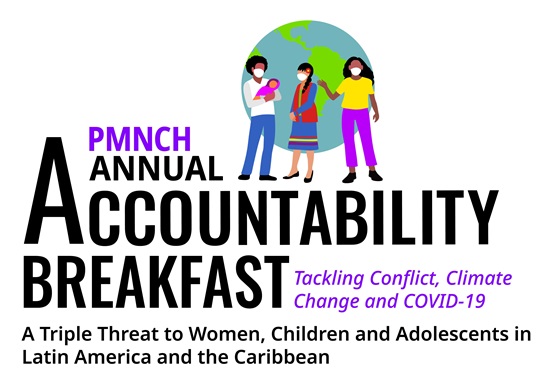
We are thrilled that Maria Antonieta Alcalde Castro, Director of Ipas LAC and PMNCH NGO constituency Chair, has agreed to moderate the 11th PMNCH Annual Accountability Breakfast on 22 September focusing on the impact of the COVID-19 pandemic, crime, and conflict, and the climate crisis on the health and well-being of women, children, and adolescents across the Latin America and Caribbean region. Investing in sustainable health financing and programs, policies, and services to improve health outcomes among adolescents and their families, particularly those most vulnerable, will form the backdrop of proposed solutions.
To participate in the Accountability Breakfast, you can register here.