
.png?sfvrsn=6d0e27cd_1 "Partnership for Change - v7 (1)")


A growing health financing crisis threatens to reverse decades of progress toward achieving the Sustainable Development Goals (SDGs), particularly those focused on the health and well-being of women, children, and adolescents (WCA). Between 2023 and 2025, Official Development Assistance (ODA) for health is projected to decline by as much as 40%, falling from US$25.19 billion to US$15.07 billion (P4H Network, 2024). A recent estimate suggests that recent cuts to developmental assistance for health will decrease funding to newborn and child health, maternal health, and family planning by 17%, 23% and 34%, respectively (McKinsey, 2025). The decline in funding for women, children, and adolescent health (WCAH) risks reversing decades of progress, widening health disparities, and undermining global commitments to equity and universal health coverage.
As countries face shrinking fiscal space and shifting donor priorities, bold political leadership is urgently needed to protect and expand investments in health (Devex, 2025). Strengthening domestic resource mobilization and increasing the share of national budgets allocated to health are critical for sustainable and predictable financing. In parallel, innovative financing approaches—such as blended financing, health taxes, and results-based funding—offer opportunities to expand fiscal space and improve the efficiency of spending. Realizing these gains requires strong political will, strategic policy choices, and coordinated action across sectors.
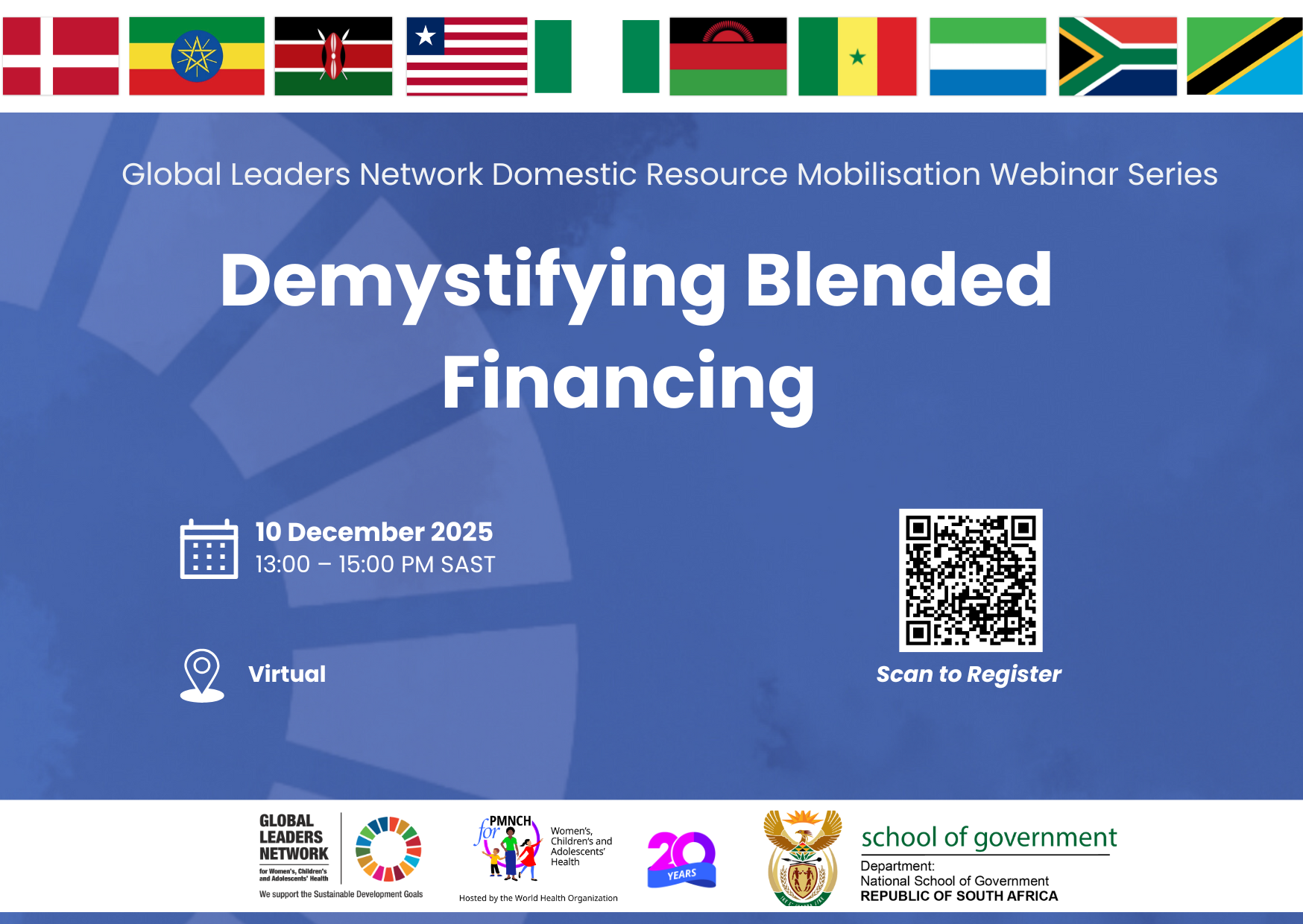
The third episode of this webinar series will explore how countries are using blended financing to attract private sector investment and expand fiscal space for health. It will unpack practical approaches, such as concessional capital, guarantees, and technical assistance, that can help governments de-risk health investments and sustain funding for women’s, children’s, and adolescents’ health.