
.png?sfvrsn=6d0e27cd_1 "Partnership for Change - v7 (1)")


The 39th Ordinary Session of the Assembly of the African Union, held in Addis Ababa from 13 to 15 February 2026, brought together African Heads of State and Government for two days of high-level deliberations that placed the health and future of Africa's people at the centre of the continental agenda. Amid tightening fiscal space, declining development assistance, and growing calls for African health sovereignty, the Summit reflected a collective determination to strengthen domestic systems, reduce external dependency, and protect the health of women, children, and adolescents.
On the sidelines of the Summit, the Global Leaders Network for Women's, Children's and Adolescents' Health (GLN), in partnership with the Partnership for Maternal, Newborn and Child Health (PMNCH), convened a high-level ministerial roundtable titled "Investing in Africa's Future: A Ministerial and Partner Conversation on Women's, Children's and Adolescents' Health." The gathering brought together African health ministers and global partners to take stock of progress, address persistent challenges, and chart pathways forward for maternal, newborn, child and adolescent health across the continent.
The stakes could not be higher. Sub-Saharan Africa accounts for approximately 70% of global maternal deaths and nearly 58% of global under-five deaths, with almost half of these deaths occurring in the neonatal period. This crisis is intensifying. External health funding faces a projected 40% contraction between 2023 and 2025, while pushback against sexual and reproductive health and rights (SRHR) risks eroding hard-won gains.
In response to these mounting pressures, SRHR emerged as a priority requiring unambiguous protection. Participants reiterated that progress on maternal and child survival depends on safeguarding comprehensive sexual and reproductive health services, particularly for adolescents who face the highest risks when access is restricted. In Africa, complications during pregnancy and childbirth are the leading cause of death for young women aged 15-19 years, with abortion-related complications remaining a significant driver of maternal mortality.
"We are at that point where if we don't maneuver well, we'll find ourselves in the next five years declining from all those gains that we have achieved this far. The biggest backlog that we have still in maternal mortality is abortion-related complications, which is mostly from adolescents. With the pushback, you'd see how that would just tip us off." —Dr. Owen Chikhwaza, Director of Reproductive Health Services, Malawi
.jpeg?sfvrsn=c45e0ce6_1 "WhatsApp Image 2026-02-15 at 01.19.59 (1)")
From left to right: Dr Ouma Oluga, Principal Secretary, State Department of Medical Services, Ministry of Health, Kenya; H.E. Dr Jean Kaseya, Director General, Africa CDC; H.E. Dr Mekdes Daba, Minister of Health, Ethiopia; and Dr Francis Kasolo, WHO AU Liaison Office and WHO Representative to Ethiopia.
Participants also expressed support for innovative financing mechanisms to address the funding crisis. The Public-Private Partnership (PPP) Health Accelerator, an official G20 legacy project spearheaded by South Africa during its 2025 presidency, represents one such innovation. Rather than replacing government budgets, it's designed to catalyze additional resources from diaspora remittances and private sector capital.
"In an era of constraint, aid and global fiscal uncertainty, the Global South is stepping up to co-finance and sustain its own health systems." —Hon. Dr. Aaron Motsoaledi, Minister of Health, Republic of South Africa
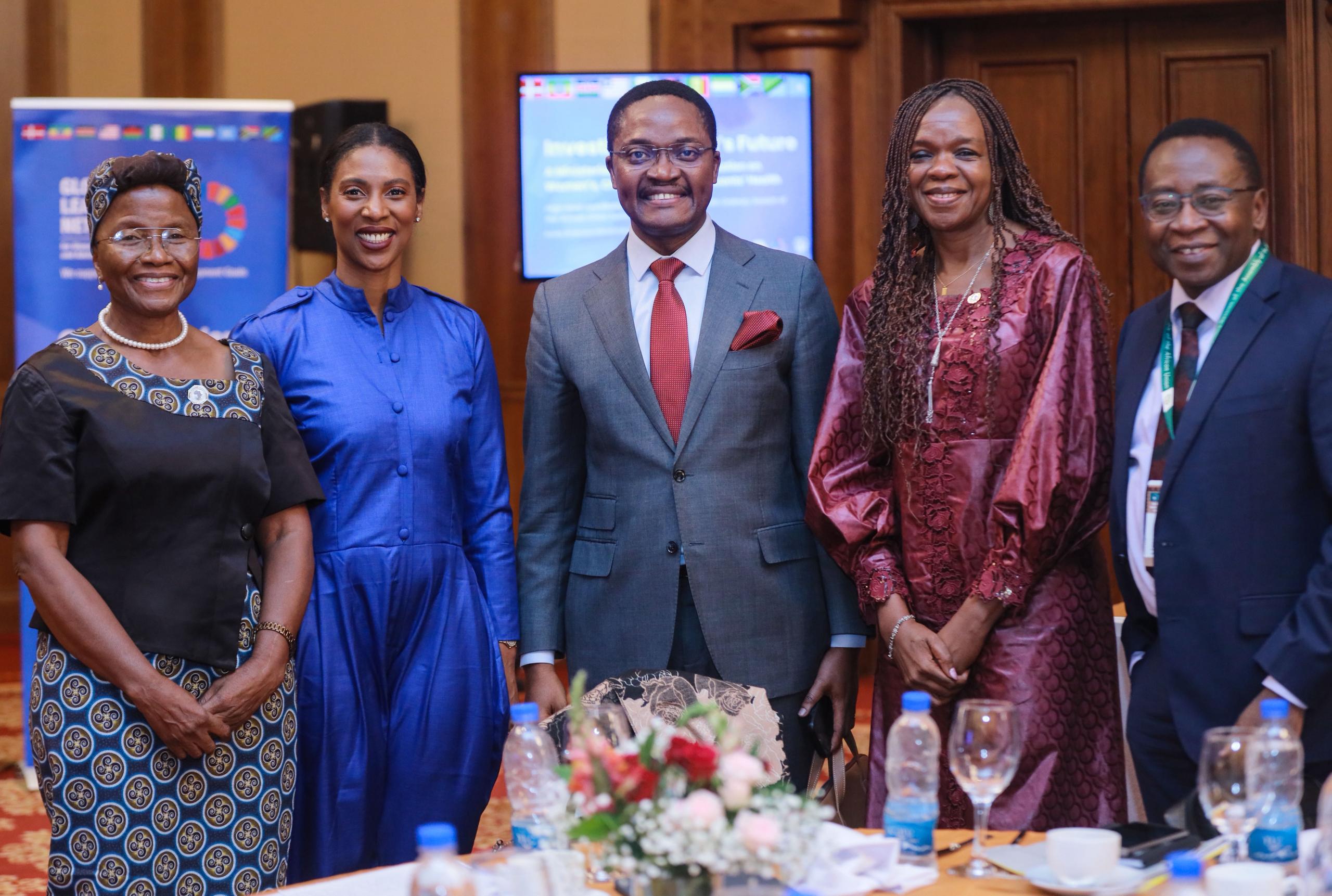
From left to right: Joy Phumaphi, Executive Secretary, ALMA; Kadi Touré, Communications Team Lead, PMNCH; Dr. Landry Dongmo Tsague, Director of Primary Health Care, Africa CDC; Alison Parker, Deputy Regional Director, UNICEF; Dr. Paul Ngwakum, Regional Health Adviser, UNICEF Eastern and Southern Africa.
The session reinforced GLN's three strategic priorities: ensuring women, children, and adolescents are deliberately prioritized in universal health coverage implementation; protecting and increasing domestic investment for WCAH; and upholding sexual and reproductive health and rights as both a human right and socio-economic imperative.
The African Union's appointment of additional AU Champions for health signals strengthened political will at the highest level to prioritize maternal, newborn and child survival across the continent. Combined with broader Summit commitments on health sovereignty and domestic financing, this creates momentum for coordinated action at national, regional, and continental levels.
"The time to act is now. We cannot continue as usual, not only taking the stage and making statements, but bringing bold actions that we can share among each other." —Hon. Dr. Mekdes Daba, Minister of Health, Federal Democratic Republic of Ethiopia