
.png?sfvrsn=6d0e27cd_1 "Partnership for Change - v7 (1)")


On 29 November 2025 the Federal Ministry of Health (MoH), in partnership with the Clinton Health Access Initiative (CHAI) and PMNCH, convened a first-of-its-kind advocacy consultative workshop for media professionals - a milestone in advancing Ethiopia’s Women’s, Children’s, and Adolescents’ Health (WCAH) outcomes. This workshop was inspired by the communications and advocacy workshop organized by PMNCH, and in response to a need identified by FMOH and CHAI colleagues.
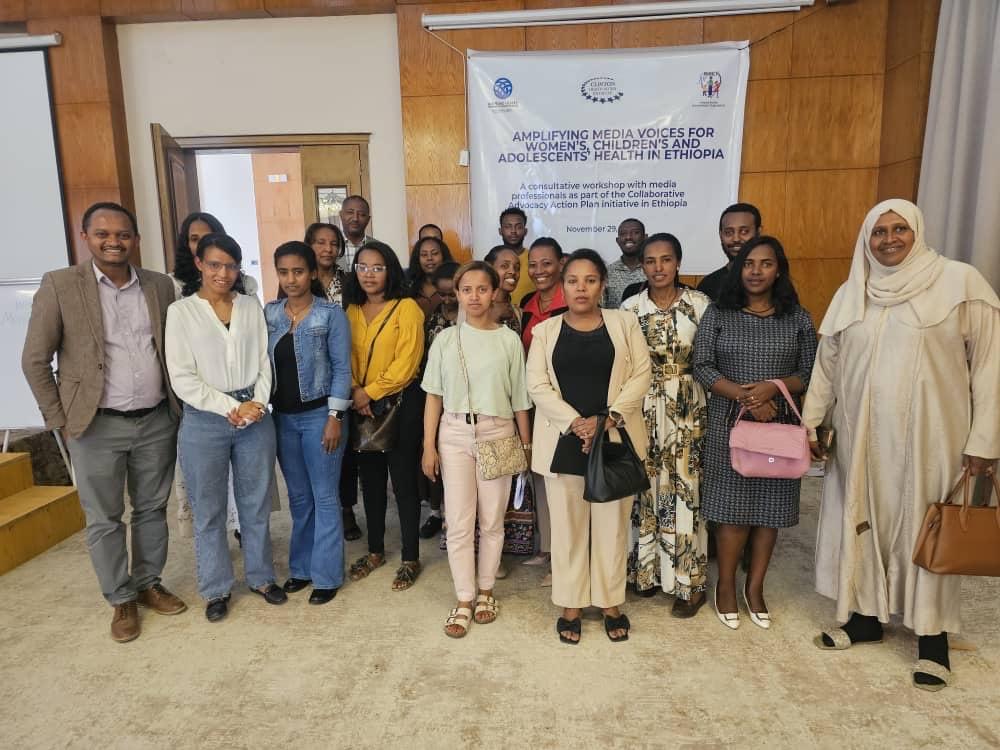
Participants at the media advocacy workshop
The workshop brought together 37 journalists, editors, producers, digital activists, government communicators, media managers, communication specialists, health reporters together for the first time with all key FMOH units working on WCAH issues - a broad spectrum of expertise – in a conversation on what practical actions Ethiopian media can take to advance WCAH.
The consultative workshop facilitated information sharing with media on WCAH issues, and provided a forum to hear directly from media personnel on their recommendations for effective communication and needs to be stronger advocates for WCAH issues. In doing so, it ignited a unified collaboration, one where Ethiopia’s media emerges not as observers, but as strategic partners in accelerating national WCAH goals.
Ethiopia’s Collaborative Advocacy Action Plan (CAAP): A Framework Anchored in Partnership, Accountability, and Community Voices
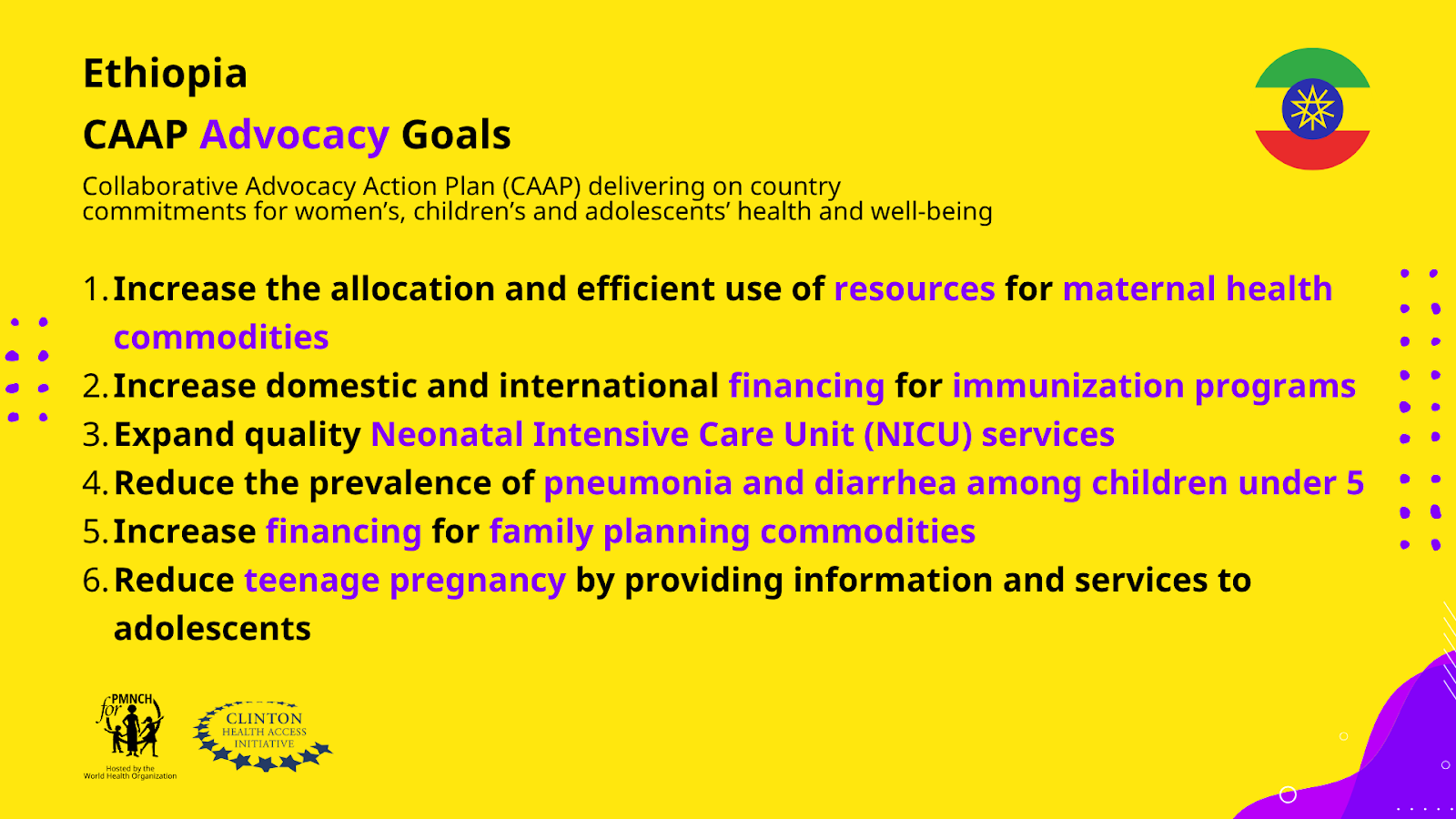
The CAAP plan is a national, multi-stakeholder advocacy roadmap designed to mobilize evidence, partnerships, communication, and accountability for improved WCAH outcomes. Aligned with the broader PMNCH Strategy, the CAAP plan prioritizes strengthened evidence generation; responsive, engaging communication and cross-sector partnerships to advance the following agreed to advocacy goals in Ethiopia:
Accountability and community voice
Media professionals — who shape public understanding, frame national conversations, and influence community action—are central actors in this ecosystem. Yet, until now, their engagement with Ethiopia’s WCAH agenda has remained limited and fragmented. The consultative workshop changed that dynamic.
Opening Moments: Setting the Tone for Collaboration
The workshop underscored the need for coordinated media engagement across government, with the FMOH emphasizing integrated, cross-departmental collaboration. PMNCH’s Executive Director highlighted media’s role in amplifying community voices and evidence to keep WCAH commitments visible and actionable, to drive accountability, a message that shaped the day’s discussions.
Understanding the Health Landscape: Technical Presentations that Grounded the Conversation
FMOH’s experts presented Ethiopia’s maternal, newborn, child, adolescent, and SRH situation—an essential foundation for accurate, evidence-driven reporting. The sessions highlighted:
Progress and challenges in relation to MNCH, SRHR and AHWB issues from service delivery, quality and equity perspectives
CAAP aligned priority interventions as they relate to the FMOH’s priorities
Messages and actions that media can take by making the issues and necessary actions to be taken understandable in common terms
For many participants, these presentations clarified not only the data, but the stories behind the numbers. They illuminated systemic challenges, and areas where media advocacy can drive meaningful change.
The Power of Storytelling: PMNCH facilitated Advocacy and Narrative Framing Training
PMNCH facilitated a session on storytelling for WCAH advocacy, which equipped participants with techniques aligned with PMNCH’s global strategy:
- Rights-based and equity-centered framing
- Evidence-driven reporting
- Solution-focused narratives
- Constructive, hope-based messaging
- Countering misinformation with verified content
- Ethical reporting on sensitive health issues
- Practical steps that media can take and key considerations for WCAH advocacy
Participants discussed how to transform technical health content into accessible, emotionally resonant stories that capture public interest and mobilize action. This alignment with global best practices—focused on hope, solutions, lived experiences, and accountability—was one of the workshop’s unique strengths.
Group Work: Co-Creating the Future of WCAH Advocacy by Media
Participants divided into thematic groups and, each group used a structured Group Work Guidance Tool to develop an advocacy plan with the following elements:
- Priority advocacy issues
- Key messages and potential story taglines
- Story angles grounded in evidence and lived experience
- Media formats and dissemination channels
- Clear support needed from MoH and partners
Outcomes: Concrete Steps That Will Shape the Next 6 Months
The workshop concluded with clear, actionable commitments:
1. Six-Month Media Action Plans
Each media organization committed to developing a CAAP-aligned 6-month advocacy plan including:
- Priority stories
- Timelines
- Channels (TV, radio, print, digital)
- Required support from FMOH’s and partners
These plans will be submitted to the FMOH’ PR & Communication Directorate and serve as the backbone of coordinated national WCAH advocacy.
2. Strengthened Collaboration Mechanisms
Media houses and, together, the Public Relations, Maternal, Newborn, Child and Reproductive Health as well as Adolescent and Youth Health Departments of the FMOH agreed to:
- Maintain continuous communication
- Facilitate interviews and expert access
- Share data, fact sheets, and talking points
- Participate in joint campaigns during national and global health days
- Enable field visits for evidence-based storytelling
3. Resource Mobilization for Ongoing Engagements
The FMOH is keen to mobilize technical and financial resources, including from partners, to replicate similar consultative workshops in regions and to develop training modules on”
- Digital advocacy
- Data-driven reporting skills
- Solutions journalism
- Ethical reporting standards
Addressing Barriers: Honest Conversations that Strengthened Trust
During plenary discussions, participants surfaced real-world barriers that impede high-quality WCAH reporting:
- Delays in obtaining approval to data and to access facilities for documentaries or stories
- Media’s limited focus on health content due to commercial pressures
- Need for integrated engagement across FMOH departments
- Resource constraints affecting training, mentorship, and field reporting
The FMOH acknowledged these challenges and emphasized the need for improved coordination, more frequent joint engagements, and better resource mobilization for media capacity-building.
A particularly innovative idea emerged: establishing a recognition or award system for media houses that produce high-quality CAAP-focused stories.
Such motivation systems align well with PMNCH principles—rewarding excellence, spotlighting best practices, and sustaining momentum.
A Unique Value Add
Unlike typical media briefings or technical trainings, this workshop delivered three unique contributions to Ethiopia’s WCAH advocacy:
1. It focused on media as strategic partners: It uniquely focused on strengthening capacity of media as co-creators of national WCAH narratives;
2. It strengthened media’s partnerships with the FMOH in an integrated manner: By bringing together all key departments of the FMOH working on WCAH issues the workshop facilitated a coordinated and cohesive exchange with media personnel on these issues; and
3. It produced actionable outputs and commitments: The 6-month action plans ensure that the momentum does not end with the workshop; it translates into sustained advocacy.
A Turning Point for WCAH Storytelling by the Ethiopian Media
This workshop marked a significant shift—from information-sharing to active co-creation. For the first time, media actors and health experts jointly shaped advocacy narratives tailored to Ethiopia’s context. As the workshop closed, one theme became clear: Ethiopia’s WCAH advocacy will be shaped not only by policies and programs, but by stories—stories rooted in evidence, humanity, and hope.
With strengthened collaboration between media and the FMOH, there is a potential to transform how the nation sees, understands, and engages with the health and rights of women, children, and adolescents through the strategic efforts of the media.
The Bishoftu meeting was the beginning of a coordinated media movement—a shared advocacy voice powered by partnership, evidence, and the storytelling strength of Ethiopia’s media.