
.png?sfvrsn=6d0e27cd_1 "Partnership for Change - v7 (1)")


At a time of shrinking health financing, growing anti-rights movements, and overlapping global crises, the Partnership for Maternal, Newborn & Child Health (PMNCH) convened the Global Leaders Network for Women’s, Children’s, and Adolescents’ Health (GLN) technical focal points and coordinating partners of the Collaborative Advocacy Action Plan (CAAP), in Nairobi, Kenya for a landmark three‑day hybrid meeting.
For the first time, the two initiatives convened in-person, bringing together representatives from 12 countries to bridge high‑level political advocacy with country-and community‑level implementation through strategic, forward-looking planning and collective action to accelerate progress for women’s, children’s and adolescents’ health.
“The CAAP and the GLN are complementary by design. Together, they connect grassroots, country‑level advocacy with high‑level political and diplomatic leadership. This complementarity is about accelerating commitments for women’s, children’s and adolescents’ health — globally, regionally and nationally.” — Rajat Khosla, Executive Director, PMNCH
A Critical Moment for Women’s, Children’s, and Adolescents’ Health
Participants opened the meeting with a frank assessment of the global landscape. International development assistance has declined by an estimated 40%, with funding for HIV and reproductive health services facing abrupt cuts. Growing political pushback and misinformation on sexual and reproductive health and rights (SRHR) are threatening the provision of essential services, while the broader financing crisis has disrupted service delivery through facility closures, losses in the frontline health workforce, and breakdowns in essential supply chains.
Recent WHO data further reinforced the urgency. An estimated 260,000 women die each year from preventable causes related to pregnancy and childbirth, with Sub-Saharan Africa accounting for around 70% of all maternal deaths. Despite sexual and reproductive health care being central to universal and fundamental rights, 1.1 billion women globally still have an unmet need for modern contraception, and just over half, 56.3%, of women aged 15–49 are able to make autonomous decisions about their own sexual and reproductive health.
To address these realities, discussions remained firmly solution-oriented. As Dr Lwazi Manzi, Head of the GLN Secretariat, observed, “The boldness of discussions, including on safe abortion, adolescent sexuality, and legislative reform, reflected the platform fulfilling its purpose as a space for frank dialogue and collective action.”
Complementary Strengths, Shared Purpose
A central focus of the convening was how the distinct but complementary roles of the GLN and CAAP can reinforce one another and achieve more as a collective. The GLN operates at the highest political level, leveraging head-of-state leadership, diplomatic engagement, and direct access to finance ministers and regional political bodies. CAAP partners, working across ten countries, drive change from the ground up by mobilising national coalitions, elevating community priorities, and holding governments accountable for their commitments. “Accountability is not confrontation, it is collaboration that ensures every budget line translates into real services for people.” added Rajat Khosla, Executive Director at PMNCH.
The convening also facilitated peer learning and exchange, bringing together additional partners, including Africa CDC, the Kenya Legal and Ethical Issues Network on HIV and AIDS (KELIN), Dr Githinji Gitahi from Amref Health Africa as one of the architects of the CAAP initiative, UNICEF for Every Woman Every Newborn Everywhere (EWENE) initiative, and UNFPA, who shared how their programmes can support and strengthen advocacy processes at country level. Partners exchanged good practices, lessons, and tools to strengthen collective impact on women's, children's, and adolescents' health, including on SRHR and adolescent health and wellbeing.
The meeting was deliberately structured to leverage these layers of influence, moving from country-level coalition reflection on Day 1, to joint strategic alignment on Day 2, and high-level diplomatic and political positioning on Day 3. The result was a renewed commitment and the need for collective action to advance progress for WCAH.
“Real change will only happen when advocacy, policy, and financing are no longer pursued in silos but brought together into a single, coordinated movement for health equity. It is at this intersection, where political will is matched with resources and accountability will lead to transformative, population-level impacts for women, children, and adolescents." — Dr. Lwazi Manzi, Head of Secretariat, Global Leaders Network
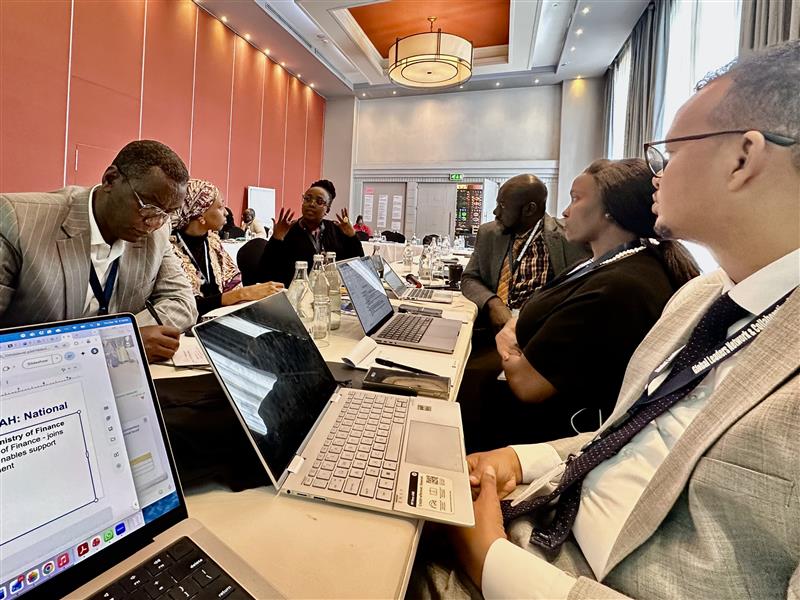
Through a combination of expert presentations, plenary discussions, and group work, participants engaged in discussion to accelerate action across the three priority areas.
Three Priority Areas for Accelerated Action
Discussions across the three days saw three recurring and interconnected themes: the policy environment, health financing, and countering misinformation and disinformation.
"We came with a simple question, how can we deliver for the health and rights of women, children, and adolescents? The answer: through better policy, financing, and countering misinformation."— Rajat Khosla, Executive Director, PMNCH
1. Navigating a Hostile Policy Environment
Participants highlighted a global shift toward moral and ideological policymaking that restricts access to comprehensive sexuality education, family planning, and SRHR services. The expansion of the Global Gag Rule and the exclusion of civil society from key global health agreements were flagged as having wide‑ranging, chilling effects on service delivery and advocacy. As Khadija Hamid Bobboyi of the African Health Budget Network (AHBN) and coordinating partner for CAAP Nigeria observed: "Civil society is not an external voice operating at the margins, it is the critical bridge between policy commitments and lived realities."

Khadija Hamid Bobboyi, African Health Budget Network (AHBN) and CAAP Ngieria delegate speaking during the group plenary discussion.
Recommendations included:
Strengthening coordinated regional responses to policy shifts and donor changes
Harnessing intergovernmental coordination, including networks of champions across Parliament, Ministries of Health, Finance, Treasury, Education, and civil society
Promoting the use of accountability frameworks and scorecards, including regular performance reporting mechanisms
Promoting equity- and quality-focused policies that explicitly name adolescents, rural communities, informal settlements, and marginalized groups as target populations.
Strengthening regional mechanisms, including linking to regional platforms such as ECOWAS to prioritize SRHR
Facilitating peer learning across countries by un-packing cross-country lessons on legislative and policy progress
“Liberia is now drawing lessons from South Africa’s structured, multi-stakeholder approach to legalizing abortion and expanding safe services, showing that progressive, evidence-based legal reform can protect lives and transform reproductive health outcomes.” Dr Teyah Sackie Moore, Assistant Minister of Health, Liberia
2. Health Financing: From Crisis Response to Structural Reform
Africa CDC’s Director, Center for Primary Health Care, Dr Landry Dongmo Tsague, provided a stark financing analysis. Despite a continental GDP of nearly USD 3 trillion, nearly 60% of economic output is absorbed by debt servicing rather than social investment. According to Africa CDC, women in the region bear a significant share of emergency obstetric costs directly, a burden that falls hardest on those least able to pay.
Recommendations included:
Using clear return on investment messaging for RMNCAH advocacy, framed in language that resonates with Ministries of Finance and other key decision-makers
Addressing inefficiencies in current allocations and spending to maximize impact
Leveraging financing experts and existing tools to support the allocation and monitoring of execution of financial commitments
Engaging early in the budget processes and through structured engagement with national governments, including Ministers of Finance and Policy and planning departments
Framing the Abuja Declaration as a minimum benchmark rather than a ceiling.
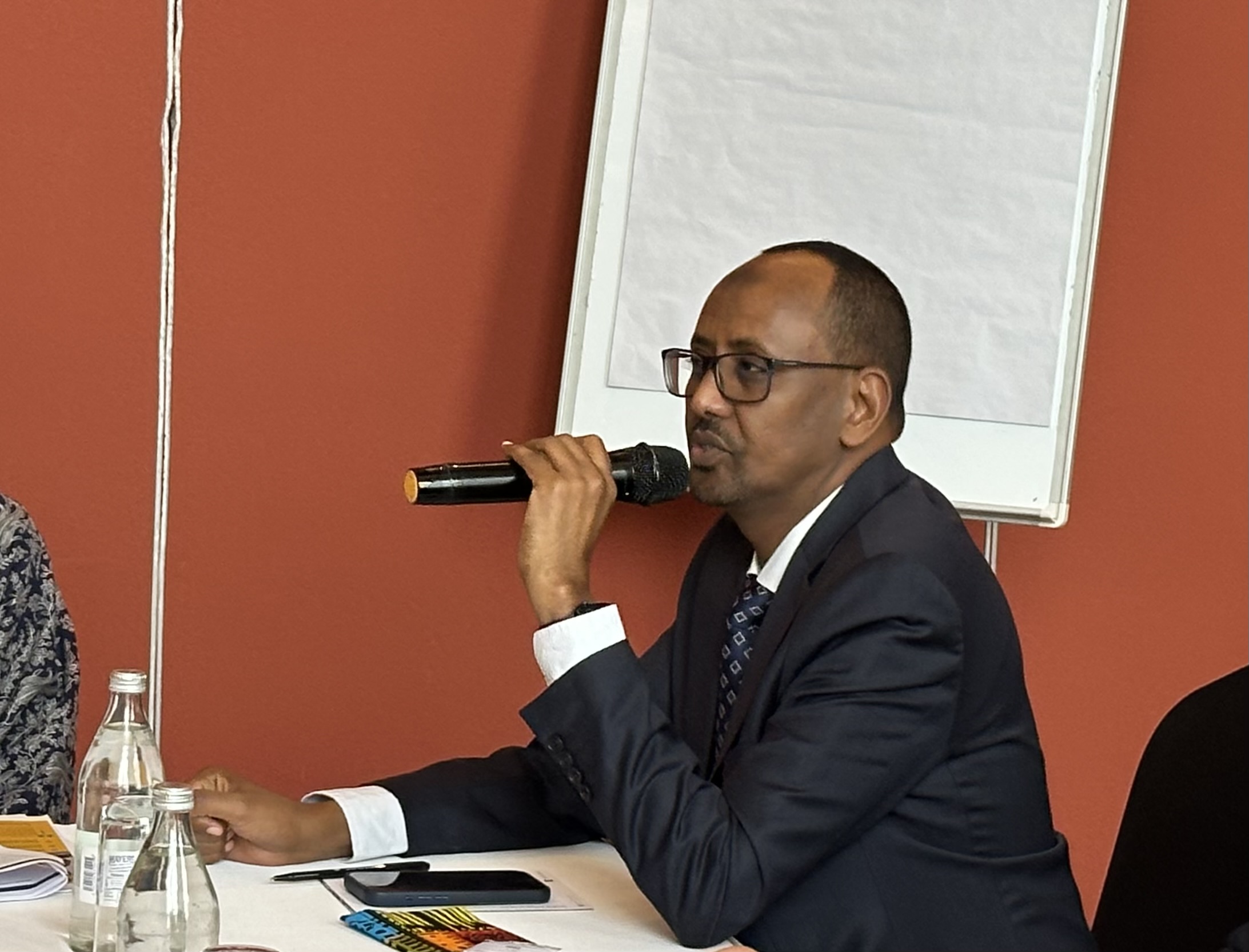
Dr. Isaak Bashir, Head of the Department of Family Health, Ministry of Health, Kenya, and GLN Focal Point, provided welcoming remarks for the Joint GLN CAAP Convening.
Participants expressed a strong consensus that while the Abuja Declaration sets a target of 15% of national budgets allocated to health, low-income African countries must push beyond percentage targets to achieve meaningful health outcomes. As Dr. Githinji Gitahi, Group CEO of Amref Health Africa, noted during the CAAP partner meeting, “Even Abuja, for me, is a floor. It’s not a ceiling. 15% of a chicken is very different from 15% of an elephant. Even if you achieve 15%, you don’t have enough to do the work we need to do."
3. Countering Misinformation and Disinformation
Well‑resourced anti‑rights networks are using coordinated digital disinformation, increasingly amplified by AI, to undermine SRHR. Participants stressed the importance of context-specific framing, youth‑led digital engagement, and trusted community and faith leaders as counter‑voices, with regional bodies such as Africa CDC and ECOWAS playing a critical enabling role.
Dr. Bocar Samba Ly, from the Senegalese Ministry of Health and Social Action also challenged participants to move beyond treating African cultural and social practices solely as barriers. Research and advocacy should actively surface practices that enable SRHR progress, such as the country’s Bajenu Gox model, which draws on culturally respected community figures to deliver health messaging and drive behaviour change at community level. This reframing positions African culture as a resource for advocacy, not simply an obstacle to overcome.
In Allan Maleche, KELIN Executive Director's concluding remarks, he reminded participants, "Countering misinformation is not only about facts. It is about protecting democratic policy space. Which requires coordinated legal, political and social action."
Recommendations included:
Leveraging trusted community voices and existing communications approaches, including coordinated social media campaigns, to counter misinformation
Using diverse media channels, especially those accessible to rural and marginalized populations and expand formats
Strengthening ministry communication strategies to respond to misinformation
Supporting a regional "Counter-Misinformation Hub" characterized by centralised monitoring and rapid response, coordinating messaging across countries
“Gen Z and young people are media-advanced, and we can use this space to advance our cause by aligning with trending stories and using human-interest stories to help counter misinformation. At the same time, there is a need for targeted community dialogues with influential figures, particularly religious and traditional leaders, who shape values within communities.” — Levy Mkandawire, Amref Health Zambia, coordinating partner for CAAP Zambia
From Convening to Action and Results
The Nairobi meeting reaffirmed a shared commitment to coordinated action ahead of key political moments in 2026. More than an exchange of ideas, the convening strengthened alignment between political leadership and civil society, reinforcing a collective resolve and cross-country learning to accelerate progress for women, children, and adolescents at a time when it is most urgently needed.
“Aligned partnerships are the difference between fragmentation and impact. When governments, donors, and implementing partners rally behind nationally defined priorities, rather than fragmented agendas, we move from isolated interventions to systems transformation” — Dr. Bokar Samba, Senegal