
.png?sfvrsn=6d0e27cd_1 "Partnership for Change - v7 (1)")


What is stillbirth?
The impact on parents who have a stillborn baby
- Stillbirth is one of the most devastating experiences for a parent to go through.
- Stillbirth gives rise to societal, psychological and physical challenges.
- Both parents can be significantly affected by the stillbirth of their baby, often experiencing grief, anxiety, fear and suffering, even if they may not express these emotions outwardly or immediately. They will often turn to family for emotional support, but this need for support is not always fulfilled.
- Stillbirth may affect parents’ thinking about life and death, their sense of worth and identity and their sense of control in any future pregnancy, as well as their thinking about parenthood and child-rearing.
- After stillbirth, some parents might want to be alone, hide their grief, quit their religious practice, have doubts about sexual intercourse, feel remorse or guilt about not being able to save the baby, or doubt the value of antenatal care or other health providers.
- Mothers and fathers may be affected differently, and their marital life may be affected in the short-term or long-term.
- Parents also experience financial consequences related to lost income, additional healthcare expenses and funeral expenses. They may find it difficult or impossible to receive any benefits to which they are entitled, such as maternity leave; or they may find that these benefits are not extended to parents of stillborn babies.
- Reports and studies of bereaved parents from different parts of the world report challenges related both to care that parents receive in healthcare facilities and how they are treated in their communities after stillbirth.

Information sheet: Challenges related to care at the hospital
| Issue | Challenge | Parent voice | References for further reading |
|---|---|---|---|
| Key memories and experiences | Parents reported that key moments at the hospital in relation to the care that they received affected their experience. A study of bereaved parents’ experiences conducted in Ireland indicated that parents who had negative experiences recalled them with anger towards the staff involved. Both positive and negative memories were shared. | “I could feel the kindness off her [consultant]. I knew she really cared.” “During the first scan she was measuring this and measuring that and she told me she was a trainee, and in my own head I was going ‘go out and get someone who knows what they are doing’… she said ‘maybe I’m doing something wrong, go away and come back in two weeks.’” | Nuzum, Daniel, Sarah Meaney, and Keelin O’Donoghue. "The impact of stillbirth on bereaved parents: A qualitative study. |
| Acknowledgement of the baby | Most parents desire to have their babies acknowledged as irreplaceable individuals. They want to have their babies treated with dignity and respect just as with any living baby. | “I wish like at the beginning, especially in the hospital environment, they would have identified my daughter as a singular, as my daughter, as my first born as opposed to thinking, ‘Oh, you guys get healthy and you just go out and do it again and everything will be over, be replaced …’” | Farrales, Lynn L., et al. "What bereaved parents want health care providers to know when their babies are stillborn: a community-based participatory study. |
| Communication after a stillbirth | Parents have reported being unhappy with how they were told of the baby’s death with delays and misinformation. Some mothers guessed that something was wrong because of staff demeanor or conversations. A common statement made by most sonographers in a study from Kenya, as shared by mothers in Swahili, was: ‘mama hapa hakuna heartbeat’- ‘Woman, there is no heartbeat’. | One mother learned her baby had died only when the scan results were explained to medical students: “She told them, ‘When this happens, I hear when the placenta detaches from the baby!!!’ Something like that: ‘the baby suffocates, if the baby is not getting oxygen, so this has led to death, so the baby has died.’ She did not tell me direct, but she told them, and I was listening, yes. So, I realized that my baby was no more.” [Bukirwa, mother, Semi-rural Uganda] | Mills, T. A., Ayebare, E., Mukhwana, R., Mweteise, J., Nabisere, A., Nendela, A., ... & Lavender, T. (2021). Parents' experiences of care and support after stillbirth in rural and urban maternity facilities: a qualitative study in Kenya and Uganda. |
| Hospital policies & practices | Some parents expressed the desire to see and hold their stillborn babies after birth. Some were able to hold their babies while others were unable to. Often, the option to hold the baby wasn’t offered, due to hospital policy, and most women regretted not holding their babies. Cultural beliefs and sense of protection from fear and intense grief are some of the main constraints to introducing this option for mothers. Some of the unhelpful structures reported include sharing the same ward with nursing mothers, strict visiting hours, poor referral systems, and lack of follow-up for psychological support. | “You know a mother is a mother even to a dead body. I would have wished to hold the baby but I think the nurses saw my grieving and they thought that would have aggravated my pain more so they immediately took the baby away.’ [Cece, mother, Peri- Urban Kenya] “‘From 5 pm that evening, through the night I slept with the baby box…. the hospital required next of kin consent to the hospital burying the body. The stillbirth really traumatized me especially having to lie down besides [a] dead baby.’ [Beryl, mother, Urban Kenya] | Mills, T. A., Ayebare, E., Mukhwana, R., Mweteise, J., Nabisere, A., Nendela, A., ... & Lavender, T. (2021). Parents' experiences of care and support after stillbirth in rural and urban maternity facilities: a qualitative study in Kenya and Uganda. |
Information sheet: Challenges related to community support
The effects of stillbirth reach beyond the mother (as shown in the illustration below).

- Parents talk about a sense of isolation and emotional abandonment by those around them. Some received adequate care from family, friends and workmates while others felt dismissed or their experiences invalidated. This includes insensitive comments and gossip indicating the severity of stigma and shame surrounding stillbirths in some communities.
- Inadequate support at work has also been raised as a challenge during the grieving process. Inflexible policies on bereavement leave and lack of compassionate communication are very common unhelpful practices.
Parents' perspectives
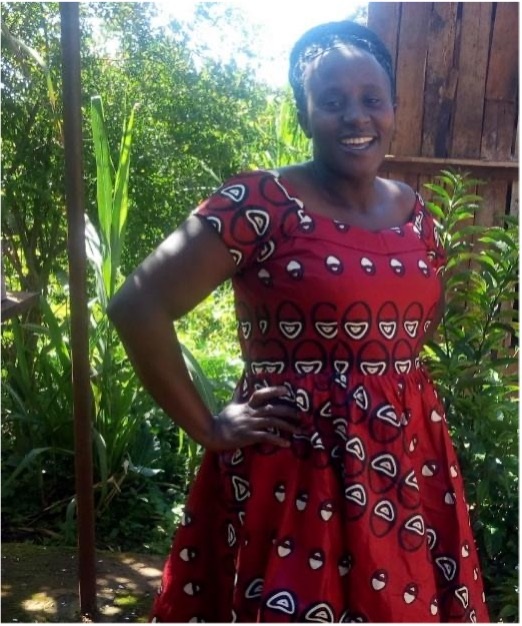
“On 19th September 2019, during my antenatal clinic at 32 weeks, the ultrasound confirmed a case of intrauterine fetal death. A case of preeclampsia. I went into denial, and pushed the baby the next day with the help of the best gynecologist. The journey of grief began until I could not bear it all alone. I joined Still A Mum in December 2019 for personalized therapy sessions and six weeks later, I joined the group sessions.
Thanks to Still A Mum for the rays of hope you give to all mums and dads who reach out. I overcame the fear of grief and now I’m a mum to a four months’ Princess. To God be the Glory”.

“I lost my baby girl in 2018 during delivery. It was a stillbirth. This was such a painful experience especially when I discovered that my baby had a higher chance of surviving if everything was done correctly. My pregnancy was categorized as high risk because of high blood pressure. It was very complicated and I would find myself on and off from the hospital. My blood pressure was not stabilizing even after being under medication.
When at week 40, I went to the hospital and I requested that the baby to be delivered. But after the ultrasound, the doctor said that the baby wasn’t due. In fact, they said that the baby was just 33 weeks. That was according to the scan. This was a mistake, because my baby was … [already affected] due to preeclampsia. And because the scan indicated that the baby was doing well, I followed what the doctor said.
One week later, I felt my water break, followed by labor pains. I was shocked because I was told the baby would come a month later even though I felt the scan wasn’t right. I was rushed to the hospital. My blood pressure had spiked. My case was an emergency because I had severe preeclampsia. Unfortunately, I was at a public hospital and despite my case being an emergency there was no doctor available. The nurses did their best to have my blood pressure reduce as they wait for the doctor. Unfortunately, no doctor came for the whole night and when I delivered early in the morning my baby was no more. She didn’t cry and I was so bitter because there was negligence from the hospital. Since it was a public hospital, it was hard for me to question anyone. Nobody was there to take responsibility and I was left to choose on how I would like my baby to be disposed. Even today, I still feel that my baby would have been saved but we had to move on.
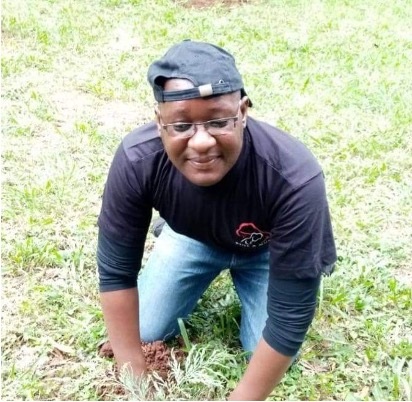
“Around May 2019, my wife and I lost our son through miscarriage. It wasn’t an easy moment for me. I remember when she missed her periods, we decided it required medical attention. We went for an ultrasound and to our surprise, there was an image of a baby. It was a surprise because you see, we were really trying to have a child. I was so happy I was going to be a dad again. I prepared my heart and my mind and created more space in there for Michael. But after around two weeks, disaster hit home. My wife started having abdominal pains. I thought it was normal and I bought some painkillers for her. Then, she started spotting and the pains … [increased] . Now that was a red flag. We sought the services of a gynaecologist for a scan. There was no heartbeat. Baby Michael was gone. The most painful part was during the procedure to evacuate him from his mother’s womb. It broke my heart to see him lying in a mass of blood in a surgical bucket. My feelings became numb and I was traumatized. Had to be strong so I can support my wife so I postponed my mourning. My heart still got a hole to date. Each time I see a pregnant woman or a family with a new-born, the pain becomes fresh again. The cries of a new-born always break my heart. It could be Michael you see. He could be one and a half years today. It still hurts that there is still no first photo together, no first hug, no first smile, no first kiss. The only memory I have of him is of that ultrasound as he slept peacefully…and his mass in a bloody bucket…deeply sad. My soul aches for him.
I realized, when I was talking to people, whether colleagues, friends or relatives, the topic around child loss was muted. Their feelings were so suppressed it’s like that child they lost never existed. Many people do not acknowledge the physical, emotional and psychological impact of child loss. You are never the same again. Most people ignore or use the wrong words to comfort you. It’s a very lonely experience until you find a support group or a counsellor who will help you process the loss and the pain like Still A Mum does. The tree planting event organized by Still A Mum was very helpful; we planted tress as we supported each other as bereaved parents.
DIG DEEPER!
Kenya-related resources and studies
4 March 2021
The impact of cultural beliefs and practices on parents’ experiences of bereavement following stillbirth:...
This study explored the influence of cultural beliefs and practices on the experiences of bereaved parents and health workers after stillbirth in urban...
24 March 2020
Parents’ experiences of care and support after stillbirth in rural and urban maternity facilities: a...
The aim of this study was to explore the lived experiences of parents in the period immediately following the death of their babies in health facilities...

24 March 2016
Stillbirths: economic and psychosocial consequences
This paper gives a global overview of the psychosocial effects of stillbirth.Learn more